
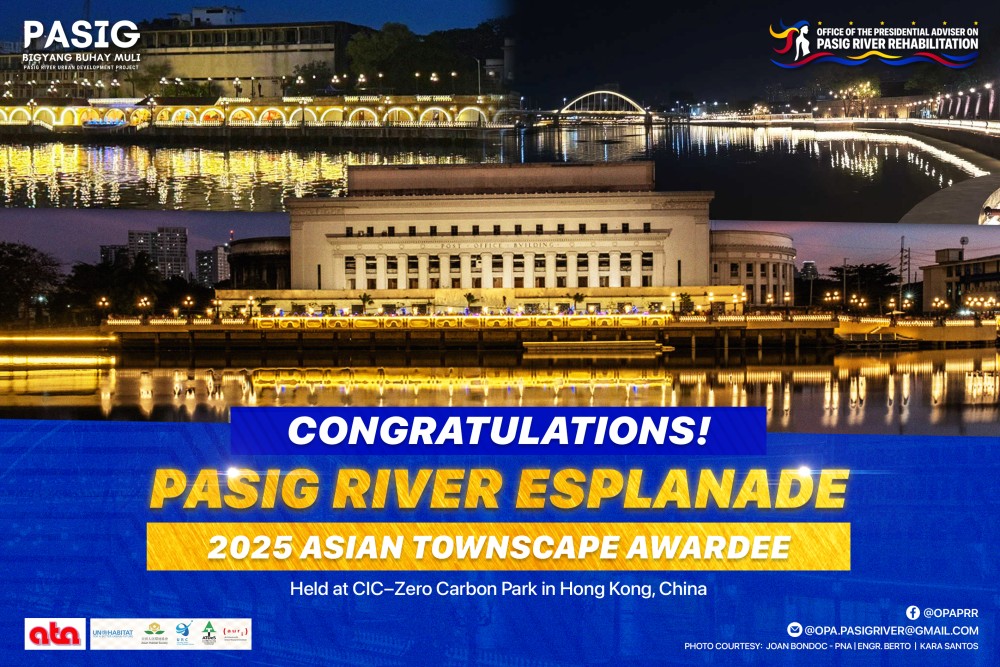
Manila, Philippines — President Ferdinand R. Marcos Jr. and First Lady Liza Araneta-Marcos led the inauguration of Phase IV of the Pasig Bigyang Buhay Muli (PBBM) Project on Sunday, marking another milestone in the ongoing transformation of Manila’s historic riverfront. The Inter-Agency Council for the Pasig River Urban Development (IAC-PRUD), chaired by the Office of the Presidential Adviser on Pasig River Rehabilitation (OPAPRR), officially launched Phase IV of the Pasig River Esplanade, which connects the Manila Central Post Office to Arroceros Forest Park along the riverbank. Guided by the vision of the First Lady, a strong advocate for Pasig River rehabilitation, the project underscores the administration’s commitment to transforming the 25-kilometer stretch of the river into a vibrant public space that integrates cultural preservation, pedestrian accessibility, and economic revitalization. CONNECTIVITY AND URBAN REVITALIZATION Phase IV further strengthens connectivity along the Pasig River, linking Arroceros Forest Park to Quiapo, the Metropolitan Theater, and Manila City Hall. The area is easily accessible through nearby transport hubs such as the LRT-1 Central Station and various public utility vehicles servicing both northbound and southbound routes. This new stretch features pedestrian promenades, bike lanes, viewing decks, kiosks, and transition bridges designed to enhance mobility and encourage public engagement along the riverfront. It closes the gap between earlier segments of the esplanade that extend toward Intramuros, Fort Santiago, Plaza Mexico, Liwasang Bonifacio, and MacArthur Park, creating a continuous route that connects key heritage, transport, and recreational zones-allowing visitors to rediscover and appreciate the nation’s history in one seamless experience. The project also highlights Manila’s cultural and historical landmarks, offering sweeping views of Arroceros Forest Park, the Metropolitan Theater, MacArthur Bridge, and Quezon Bridge, giving residents and tourists alike a chance to experience the city’s architectural heritage and renewed riverfront vitality. CONTINUING RIVER REHABILITATION Since its launch, the Pasig Bigyang Buhay Muli initiative has unified government and private-sector efforts to restore the river’s ecological balance and transform it into a sustainable urban corridor. Earlier phases revitalized areas around Intramuros, Plaza México, and the Post Office, improving connectivity, walkability, and accessibility for pedestrians and commuters. As part of its broader river rehabilitation program, the government–through the Metro Manila Development Authority (MMDA) and partner local government units (LGUs)–together with the Asian Development Bank (ADB) have introduced ClearBot, a solar-powered, AI-enabled robotic vessel designed to collect floating solid waste and water hyacinth while transmitting geotagged data to a live dashboard. The ClearBot pilot project, implemented under ADB’s REPALM initiative, supports the IAC-PRUD and demonstrates scalable, technology-driven solutions for river cleanup, flood resilience, and circular-economy waste management. Initial deployment began in October 2025 at the Ilugin River in Pasig City, with additional operations planned for the San Juan River and Estero de Pandacan in Manila later this year. A ClearBot showcase was also featured during the inauguration of Phase IV of the Pasig River Esplanade, reflecting the government’s commitment to environmental innovation and sustainable urban renewal. LOOKING AHEAD The government aims to sustain this momentum through upcoming phases that will incorporate green spaces, heritage sites, and commercial hubs along the riverbanks. These long-term efforts align with the administration’s broader agenda of urban renewal, environmental sustainability, and cultural preservation. The Office of the Presidential Adviser on Pasig River Rehabilitation, in partnership with local governments and private stakeholders, will continue implementing programs that enhance public access, protect the environment, and celebrate the cultural identity of the Pasig River corridor.
Remate Express