

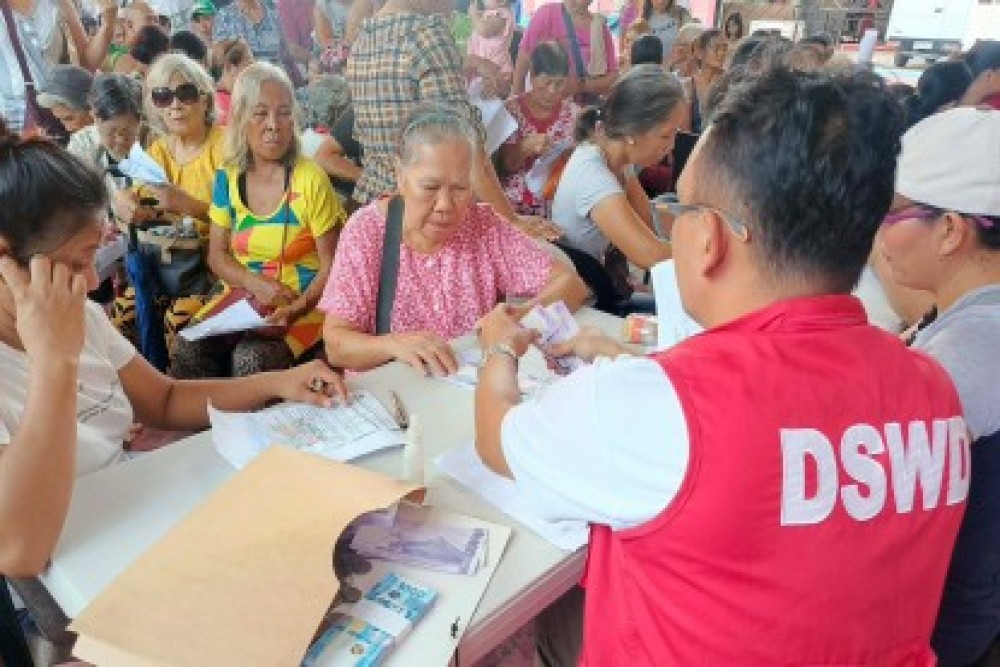
As 2026 begins, the Department of Social Welfare and Development (DSWD) reaffirmed its commitment to supporting the Marcos administration’s goal of improving the quality of life of Filipinos.
“We remain committed to strengthening social protection programs, expanding poverty alleviation services, and enhancing community resilience to ensure better well-being for all Filipino families,” Assistant Secretary Irene Dumlao said in a statement on Wednesday.
The DSWD spokesperson issued the statement following the release of the latest Social Weather Stations (SWS) survey, which showed that 29 percent of Filipino adults reported an improvement in their quality of life (gainers), 36 percent said it worsened (losers), and 34 percent said it remained unchanged.
This resulted in a Net Gainers score of –7, calculated as the percentage of gainers minus losers, which SWS categorized as fair.
The November survey indicated that the decline was largely due to decreases recorded across most regions of the country.
Mindanao posted the highest Net Gainers score at +2, classified as high, while Balance Luzon registered –7, considered fair. Metro Manila and the Visayas both dropped to “mediocre” levels, posting scores of –12 and –14, respectively.
Despite this, 44 percent of adult Filipinos said they expect their quality of life to improve over the next 12 months, according to the SWS survey.
In line with President Ferdinand R. Marcos Jr.’s call for a more transparent and people-centered budget, Dumlao said the DSWD, under the leadership of Secretary Rex Gatchalian, will ensure the prudent and effective use of public funds once the President signs the 2026 national budget.
She added that the ongoing review of the ratified 2026 General Appropriations Act (GAA) is an essential step in guaranteeing the proper and efficient utilization of government resources.
“The DSWD will support the Marcos administration’s call for responsible use of funds through prudent spending, the implementation of strong accountability measures, and the execution of social welfare and development programs that promote inclusive growth, protect the most vulnerable, and bring meaningful improvements to marginalized sectors,” Dumlao said.
The SWS survey was conducted nationwide through face-to-face interviews from Nov. 24 to 30, involving 1,200 adults aged 18 and above, with 300 respondents each from Metro Manila, Balance Luzon, the Visayas, and Mindanao.
SWS noted that the survey has sampling error margins of ±3 percent for national figures and ±6 percent for each of the four major areas.
